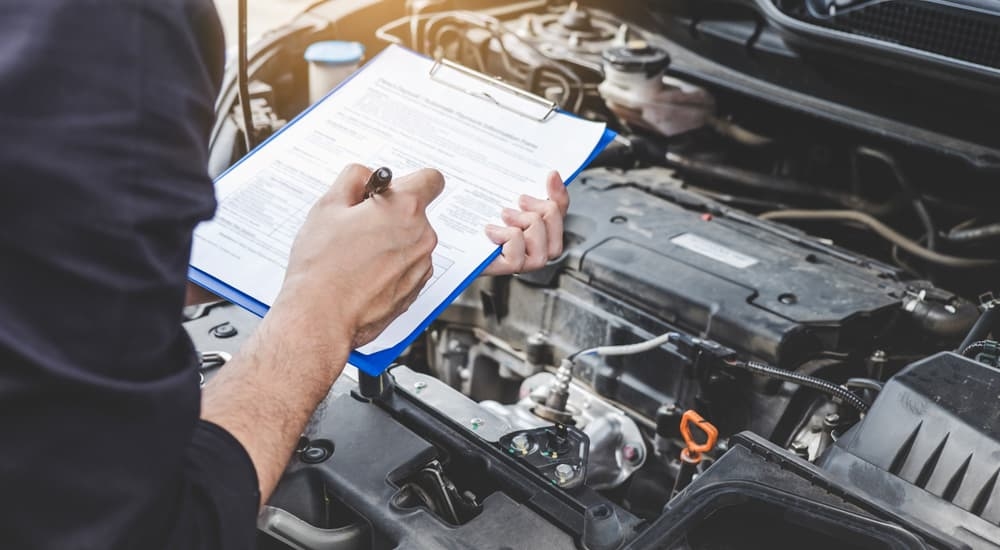
Honda is widely regarded for building reliable, long-lasting vehicles. Nevertheless, as with any vehicle, keeping up with maintenance is important for performance, safety, and reducing total ownership costs. This is why our Honda service center is readily equipped to handle everything from routine maintenance to complex repairs, including warranty-covered services.
Whether you drive a Civic sedan, a CR-V compact SUV, a three-row Passport, or a Ridgeline truck, certain maintenance services are a must. Klein Honda wants you to get the best from your vehicle, and our essential Honda maintenance guide is here to help.
Which parts and fluids should you replace or check? How often should you do so? We'll answer those questions and others that might have come up on your ownership journey.
Types of Honda Maintenance
Honda vehicle maintenance can be divided into three categories: daily, scheduled, and as needed. Ideally, you should perform daily maintenance tasks whenever you get behind the wheel. Effectively, it's a "once-over" to ensure your Honda is in good working order.
As the name suggests, scheduled maintenance is performed on a set schedule. It could be done after a certain number of miles, a preset time interval, or seasonally. As-needed maintenance is something you deal with at the first sign of trouble to prevent further issues.
Simple Pre-Drive Checks
Whenever you go for a drive, you should check a few things on your Honda. It only takes a couple of minutes, and it might save a lot of headaches later.
- Check the front and rear lights to confirm they illuminate and that there are no cracks in the lenses.
- Examine the dashboard gauges and displays to confirm there are no warning lights or issues, such as overheating.
- Turn the steering wheel and test the brake pedal to see if they work properly.
- Briefly examine the body for any new scratches that could cause rust.
- Verify your tires are inflated to the correct PSI and that the TPMS sensors are working.
- Pick up any trash in the cabin before it starts to smell or is ground into the carpet.

Routine Professional Maintenance
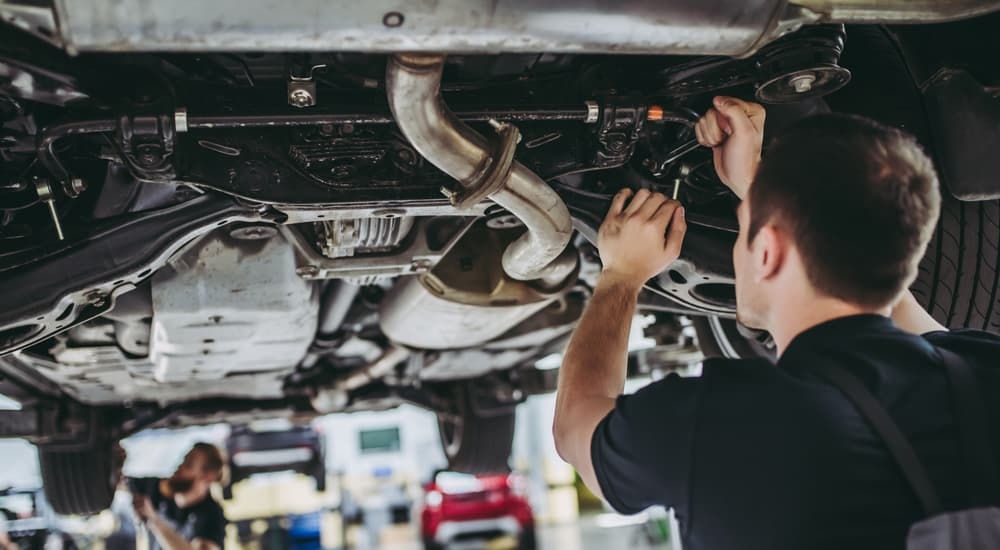
Although some scheduled and as-needed maintenance can be done at home, it's often best left to a professional. Our technicians are trained to work on your Honda and have the proper tools and equipment for each task.
Oil and Filter Changes
This vital task prevents sludge build-up and keeps vital engine parts properly lubricated. In most cases, the engine oil and oil filter should be changed every 5,000 to 7,500 miles (or at least once a year), although some Honda models can go 7,500 to 10,000 miles between changes.
Engine and Cabin Air Filters
Clean air filters are a must for performance and breathability. The engine and cabin filters can often be swapped at every second or third oil change. During every oil change, our technicians inspect your vehicle's filters and can recommend replacement if they show signs of excessive dust and debris.
Tire Rotations
The front tires generally wear out faster than the rear tires, so periodically switching them will balance the wear and help your tires last longer. Rotating them whenever you bring your vehicle in for an oil change is the most convenient option, and our technicians will check the tread depth and condition during the service.
Brake Pad Inspections
During routine tire rotations, our technicians will also inspect your brake pads for signs of wear. If replacement is recommended, we'll explain your options and replace the appropriate brake pads to help maintain safe, reliable braking performance.
Transmission Fluid
Regularly changing the transmission fluid flushes out debris and prevents overheating caused by fluid breakdown. For automatic and manual transmissions, it's recommended to change the fluid every 30,000 to 60,000 miles; CVTs require similarly frequent service.
Coolant
Coolant (also known as antifreeze), which runs through your radiator, will break down over time, causing it to not cool the engine or to freeze during the winter. On modern Honda vehicles, you might be able to go 120,000 miles on the original coolant, but intervals will get shorter after that.
Spark Plugs
Over time, the spark plugs in your engine eventually wear out. In naturally aspirated engines, modern iridium or platinum spark plugs can often go 100,000 miles or so. For turbocharged engines or older copper plugs, you may need to replace them every 30,000-50,000 miles.
Brake Fluid
Although some people recommend replacing the brake fluid only when it shows warning signs, our technicians will inspect your brake fluid during routine service and recommend replacement based on Honda's maintenance guidelines, your vehicle's condition, and inspection results. Some signs your brake fluid needs to be changed are a spongy pedal or dark brown or black fluid.
Addressing Maintenance as It Arises
Windshield Wipers
Good wipers are a must, but the change interval varies based on many factors, from frequency of use to the material quality. As such, they should be replaced whenever you notice symptoms such as streaking, skipping, split rubber, and reduced flexibility.
Light Bulb Replacement
Whenever a headlight or taillight bulb burns out in your Honda, replace it as soon as possible, as working exterior lights are essential for visibility and safety. They should always be replaced in pairs, because if the left-side headlight bulb is burned out, the right-side bulb will likely burn out soon.
Tire Changes
The National Highway Traffic Safety Administration (NHTSA) recommends changing tires when the tread depth is 2/32-inch or lower. If the tread has worn down to the wear bars or the tires show signs of damage, such as cracks, chunking, or visible cords, it's time for a replacement. Our team can inspect your tires and help you find the right set for your Honda.
Wheel Alignments
Bring your Honda to us for a wheel alignment whenever you notice symptoms such as uneven tread wear and the vehicle pulling to one side. Proper wheel alignment increases tire lifespan, improves handling, and boosts fuel efficiency.
Battery
Honda car batteries typically last between three and five years, depending on driving habits and environment. Our team will check your battery terminals during routine oil changes for signs of corrosion and replace the battery when you start to experience slow engine startups and recurring electrical issues.
Interior Cleaning
Periodic cabin cleaning will make it more comfortable and help maintain your Honda's resale value. This includes vacuuming or shaking out carpets, and using specially formulated cleaners to remove upholstery stains.
Factory Maintenance Schedule
Although the exact maintenance schedule varies by Honda model, the factory-recommended schedule is always a good place to start. This can be found in your Honda owner's manual, and it spells out the intervals for dozens of maintenance tasks.
Note that each Honda manual has two maintenance schedules: one for normal conditions and one for extreme conditions. Follow the "extreme" schedule if you frequently:
- Take trips of less than five miles or less than 10 miles in freezing temperatures
- Drive in very hot temperatures over 90 degrees
- Do lots of stop-and-go driving with extensive idling
- Drive a lot in the mountains or on muddy and dusty roads
- Use your Honda for towing heavy loads and hauling material
Get Your Honda Serviced at Klein Honda
A well-maintained Honda is a happy Honda that you can drive for thousands upon thousands of miles. At Klein Honda, we are your certified Honda service center in Everett, proudly assisting drivers throughout the greater Seattle area. Our technicians are trained to work on all Honda models—past, present, and future—using OEM parts.
With Honda Express Service, we get you in and out fast for many of the routine maintenance tasks we've discussed here. As part of any service appointment, we can perform a multi-point inspection where we examine suspension components, fuel lines, drive belts, and more. Take advantage of service and parts specials for great deals on the care your Honda needs.