The 2026 Honda Civic is the compact sedan that fits the needs of Picnic Point drivers, and you'll find a comprehensive selection of new and used models at Klein Honda. But you don't have to take our word for it; put it up against one of its competitors, like the 2026 Toyota Corolla, and you'll see why.
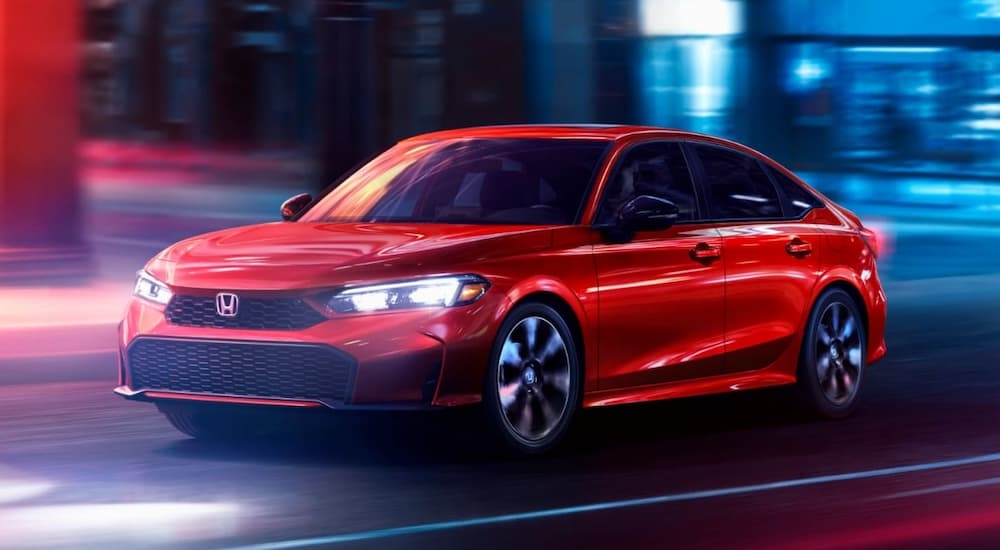
Both cars have been around for decades, are known for reliability, and promise low ownership costs. The difference comes down to how they handle real daily driving, not just reputation; this is where the Civic truly shines. And if you're already on the hunt for a Honda Civic for sale near Picnic Point, our team is ready to show you everything it has to offer.
Today, we’ve put together a comparison that shows you just how the 2026 Honda Civic Sedan stacks up against the Toyota Corolla Sedan in the areas that matter most to Picnic Point drivers: performance, fuel economy, interior space, technology, safety, and how each car feels to live with over time. While the Toyota Corolla excels in a few areas, the Honda Civic’s overall balance makes it the more flexible and comfortable option for a wider range of drivers.
What Do Most Picnic Point Drivers Need From a Compact Sedan?
Before diving into the numbers, it helps to familiarize yourself with the benefits of a compact car.
For this unique corner of the market, Picnic Point drivers are looking for:
- A car that’s easy to commute in every day.
- Strong fuel economy that keeps costs predictable.
- Enough interior space to avoid feeling cramped.
- Safety features that come standard, not buried in trims.
- A vehicle that they can keep for many years without a heavy impact on their wallet.
Both the Civic and Corolla check these boxes—but they go about it differently. The Civic prioritizes an experience where you can eat your cake and have it too. The Corolla makes a few cutbacks in some key areas, which is likely to sway your decision towards the beloved Civic.
Are you ready to jump in and explore how the Honda Civic outperforms the Toyota Corolla? Let’s begin.
Which of These Compact Sedans Offer the Best Performance Options?
The Civic's Standard Gas-Powered Engine
The standard engine in the 2026 Honda Civic Sedan is a 2.0L I-4 paired with a continuously variable transmission (CVT). For a compact sedan that’s not relying on either a turbocharged or hybrid powertrain, this engine is the sweet spot for performance and efficiency.
This engine outputs 150 hp and 133 lb-ft of torque, and has front-wheel drive (FWD) standard. This engine is tuned for smooth acceleration, predictable throttle response, and long-term durability. In everyday driving—especially stop-and-go traffic—it feels calm and consistent rather than jumpy.
The Corolla's Standard Gas-Powered Engine
The Corolla Sedan also uses a 2.0L I-4 engine paired with a CVT. This 2.0L engine outputs 169 hp and 151 lb-ft of torque, which is more peak horsepower than the Civic’s base engine, which may appeal to buyers who focus strictly on headline numbers. While it might seem like the Corolla has an advantage, the Civic has a trick up its sleeve.
The Civic Si's 1.5L Turbocharged I-4 Engine for the Win
Picnic Point drivers will find that the Civic offers a more powerful, performance-oriented engine that the Corolla can't compete with when they explore the options.
The 2026 Civic Si features a bespoke 1.5L turbocharged I-4 engine paired with a six-speed manual transmission, pumping out a hearty 200 hp and 192 lb-ft of torque. There’s no comparable engine available for the 2026 Toyota Corolla, making this a substantial win for performance-seekers
The Civic Also Has the Upper Hand When It Comes to Hybrid Performance
While both models offer a hybrid option, the Civic still reigns supreme regarding performance. The 2026 Civic Hybrid sedan is equipped with a 2.0L I-4 hybrid powertrain and an electronic continuously variable transmission (eCVT), outputting 200 hp and 232 lb-ft of torque.
We know many of you are looking for a fuel-efficient sedan to reduce gas station trips and minimize fuel costs, but performance and efficiency combined? That’s a win-win.
That 200 hp output is unusually high for a compact sedan hybrid. It gives the Civic Hybrid noticeably stronger acceleration than most competitors, especially when merging or passing, without turning the car into something sporty or inefficient.
The Corolla Hybrid Can't Keep Up
The Corolla Hybrid, on the other hand, is designed almost entirely around efficiency. Featuring a 1.8L I-4 engine and an eCVT, its lower system output keeps fuel consumption down but limits acceleration compared to the Civic Hybrid, not to mention its notably lower 138 hp output.
While this model may be a good fit for drivers who value smooth, relaxed driving and don’t necessarily need the extra power, a 31% deduction in horsepower is too much for our liking.
The Honda Civic Maximizes Its Interior Space
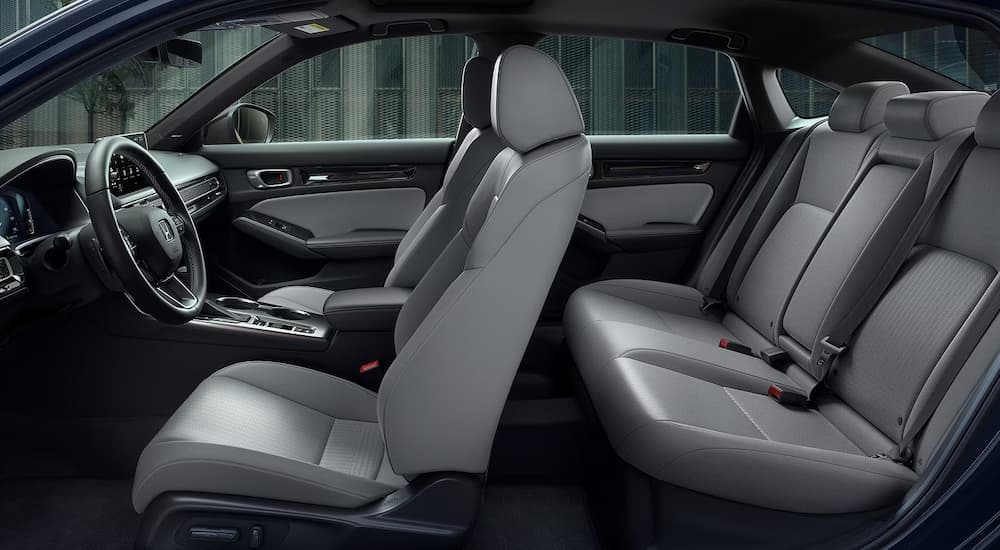
Simply put, the Honda Civic offers more passenger and cargo space than the Toyota Corolla. Let's take a look at the numbers when it comes to passenger space:
- Civic Sedan: 99 cu.ft.
- Corolla Sedan: 88.6 cu.ft.
That difference of more than 10 cu.ft. isn’t subtle. It shows up as:
- More rear-seat legroom.
- Less shoulder crowding.
- A cabin that feels more open, even with multiple adult passengers.
For drivers who regularly carry passengers—or just don’t want a cramped interior—the Civic is noticeably more spacious than the Corolla.
The Same Goes for Truck Space
It's not just passenger space that sets the Civic apart; its cargo room too. The Toyota Corolla has a smaller trunk than the Honda Civic. Cargo room matters more than most expect, especially when you’re not driving an SUV or even a midsize sedan. So how do the two stack up?
- Civic Sedan: 14.8 cu.ft.
- Corolla Sedan: 13.1 cu.ft.
That extra space makes grocery runs, weekend trips, and everyday hauling easier without rearranging cargo or filling up the cabin with your belongings.
Technology and Interior Layout
Both sedans come well equipped with technology, but they take different approaches inside.
The Civic's Google Advantage
The Civic comes standard with Apple CarPlay and Android Auto, covering the basics most drivers rely on every day. On select trims, however, the Civic goes a step further, where its seven-inch touchscreen is replaced with a nine-inch one, and Google built-in is introduced, which integrates Google services directly into the Civic’s infotainment system rather than relying on an external source (i.e., a connected Android phone).
With Google built-in, you can:
- Use native Google Maps with real-time traffic and lane guidance.
- Control navigation, music, calls, and settings using Google Assistant voice commands.
- Download your favorite navigation, music playback, and other apps via the Google Play Store.
- Search for destinations or points of interest without picking up a phone.
- Access key features even when a phone isn’t plugged in or actively running.
For drivers who rely heavily on navigation or voice controls, this setup can feel more seamless and consistent during daily driving. We’ve found it to be a game-changer, and we’re sure you will, too.
The Toyota Corolla's Limited Technology
The Corolla also comes standard with an infotainment center: a larger eight-inch screen that’s upgradable to a 10.5-inch screen. But while the Corolla’s system handles everyday needs well, the elephant in the room is that it still relies entirely on smartphone mirroring rather than offering a native platform comparable to Google built-in.
Yes, it has smartphone connectivity via Apple CarPlay and Android Auto, but the overall layout sticks to a more traditional design.
Which Model Has the Better Set of Standard Safety Features?
Both the Honda Civic and Toyota Corolla include comprehensive driver-assistance systems designed to support everyday driving, particularly during commuting and highway travel. These features are meant to reduce driver workload while keeping the driver fully engaged.
The Civic's Comprehensive Honda Sensing Suite
Every 2026 Civic Sedan includes Honda Sensing, a suite of safety and driver-assistance technologies that work together to monitor traffic conditions and help respond to potential hazards. Just a few of these many tools include:
- Collision Mitigation Braking System: Detects vehicles or pedestrians ahead and can apply braking automatically to help reduce the severity of a frontal collision.
- Adaptive Cruise Control: Maintains a set following distance from the vehicle ahead, adjusting speed automatically in traffic.
- Lane Keeping Assist System: Helps keep the Civic centered in its lane by making small steering corrections when lane markings are detected.
- Road Departure Mitigation: Warns the driver and can apply steering or braking if the vehicle begins to drift off the roadway.
- Traffic Sign Recognition: Displays detected speed limit and road signs on the instrument cluster to help keep the driver informed.
These features are especially useful during longer drives and stop-and-go commuting.
The Corolla's Safety System Falls Behind
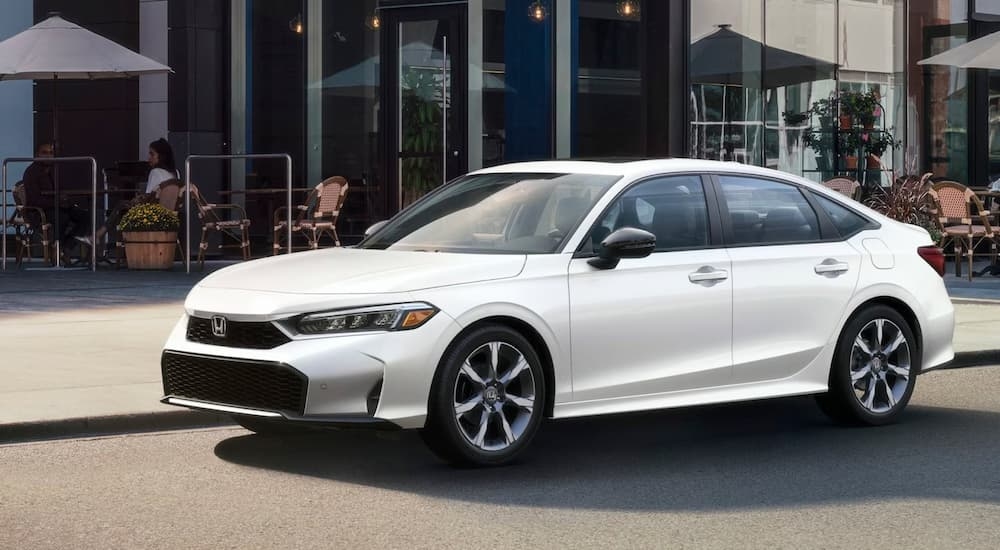
Toyota equips the Corolla Sedan with Toyota Safety Sense, which offers a similar set of driver-assistance features focused on collision prevention and lane awareness. Some features include:
- Pre-Collision System with Pedestrian Detection: Monitors traffic ahead and can apply automatic braking if a potential collision is detected.
- Lane Departure Alert: Warns the driver if the vehicle begins to drift out of its lane without signaling.
- Adaptive Cruise Control: Adjusts speed automatically to maintain distance from vehicles ahead during highway driving.
- Road Sign Assist: Similar to Traffic Sign Recognition, Road Sign Assist displays road signage on the instrument cluster as you pass it.
Both systems provide strong baseline safety coverage for everyday use, but some may prefer the slightly more mature platform that is Honda Sensing. The Civic also offers more standard safety features, which in turn, increase driver confidence.
Coupled with everything we’ve discussed thus far regarding how the Civic outpaces the Corolla, it becomes more of a complete package that’s hard to ignore.
Which Compact Sedan Fits Picnic Point Drivers Better?
The Honda Civic is the more relatable car for most Picnic Point drivers, offering a variety of advantages that include:
- More passenger and cargo space.
- A hybrid powertrain that delivers 200 hp.
- Good fuel economy without sacrificing performance.
- A more advanced and intuitive infotainment experience with Google built-in.
For many Picnic Point drivers, these features and benefits are what makes the Civic better suited for their driving life.
The 2026 Honda Civic Is Better Equipped for Picnic Point Driving
Choosing between the 2026 Honda Civic and 2026 Toyota Corolla ultimately comes down to how you expect your car to fit into everyday life. The Civic, however, offers a more adaptable package. Its roomier interior, varied engine options, and more advanced available technology make it easier to live with as routines change—whether that means longer commutes, more passengers, or relying more heavily on in-car navigation and voice controls.
Instead of being excellent in just one area, the Civic spreads its strengths across comfort, efficiency, and drivability. For drivers near Picnic Point who want a compact sedan that feels practical today and still checks the same boxes years down the road, the Honda Civic presents a well-rounded option that goes beyond the basics.