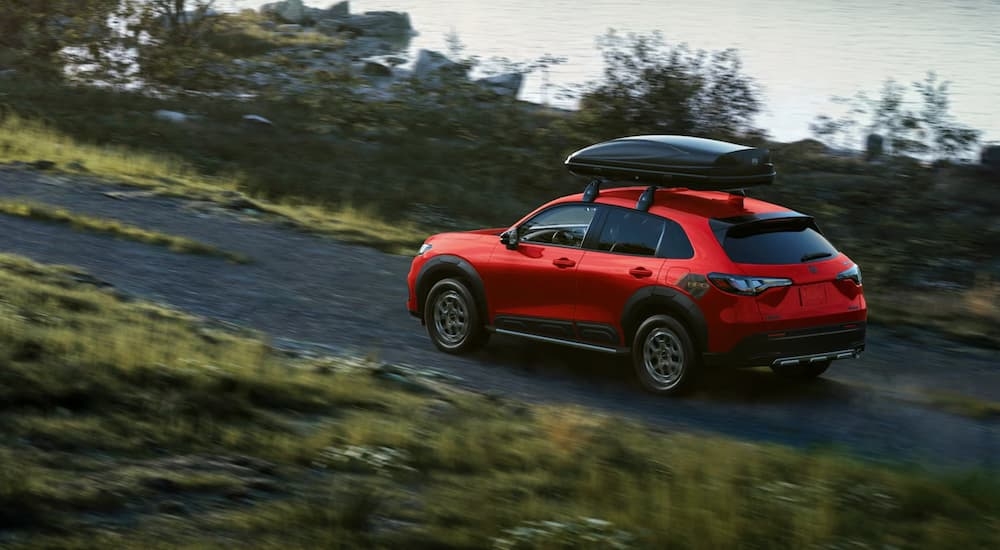
Safety is a top concern for most drivers, and this is especially true among SUV buyers. After all, the versatile interior space and excellent efficiency of SUVs appeal to families large and small, and every driver wants to ensure their most precious cargo is protected from harm when traveling on city streets or over the highway.
Fortunately, Honda's SUVs, like most modern vehicles, are equipped with ever-evolving driver assistance features that help prevent collisions from occurring. Additionally, improved active and passive safety features help protect those inside the vehicle in the event of an accident. If you're considering a Honda HR-V for sale near Seattle, you can take comfort in knowing you'll be getting an incredibly safe SUV.
Honda has always been known for producing dependable, efficient cars, trucks, and SUVs that offer upscale elegance and advanced features, distinguishing them from others. But Honda should also be noted for building some of the safest cars on the road today, with innovative safety systems that protect occupants from harm. The 2026 Honda HR-V lives up to that reputation, as every trim level comes standard with the advanced Honda Sensing suite of driver assistance systems.
The Honda Sensing Suite
For the 2026 model year, the HR-V has the Honda Sensing suite of driver assistance features standard across all three trim levels. Whereas other SUVs only include comparable features in higher-level trims, the HR-V offers its buyers the confidence of top-shelf safety systems, whether you purchase the base LX trim or the top-of-the-line EX-L.
What is included in the Honda Sensing driver assistance suite, and how do these features protect drivers? Let's review...
Collision Mitigation Braking System
The Collision Mitigation Braking System in the 2026 HR-V offers drivers a safety net when an impending collision is detected. It includes a combination of radar sensors and cameras that can detect collision threats in front of the vehicle. It doesn't just prevent collisions with other vehicles, as it can also detect pedestrians, cyclists, and pets.
There are three stages of response provided by the system. First, drivers are alerted to the threat; if they do not respond, light braking may be applied soon after. If the collision appears unavoidable, heavy automatic braking is performed to immediately slow the vehicle and reduce the force of impact.
Road Departure Mitigation System
Honda's Road Departure Mitigation System uses a windshield-mounted camera to detect lane markings and shoulder edges on the roadway. If driver attention wanes for any reason and the HR-V begins to leave the lane of travel, alerts are issued at first. If corrective action isn't taken by the driver, the system will apply light braking and steering assistance to keep the HR-V in its lane and on the roadway.
Adaptive Cruise Control
This system also relies on cameras and radar, but it helps maintain the desired speed while monitoring traffic in front of the SUV to ensure a safe following distance. The system reads input from the cameras and radar equipment and subsequently throttles the HR-V's engine up and down to precisely and safely maintain speed and following distance. The benefits of the advanced cruise control system include less highway fatigue and reduced driver frustration when traveling in stop-and-go traffic.
Lane Keeping Assist System
Similar to the Road Departure Mitigation System, the Lane Keeping Assist System is focused on maintaining lane discipline, which is especially important when traveling on multi-lane roads. The windshield camera detects any departure from the lane of travel. If any deviation is detected, the system uses the electric power steering to guide the HR-V away from dangerous lane departures.
While it isn't a hands-free driving tool, the system does aid drivers traveling between 45 mph to 90 mph in maintaining lane discipline. It provides several alerts to drivers, including steering wheel vibration and audible alerts. If those alerts go unheeded, gentle steering assistance is provided.
Traffic Sign Recognition
Another camera-based driver assistance feature that is standard in the HR-V is the Traffic Sign Recognition system. It uses the windshield-mounted camera to recognize common road signs and traffic signals. It relays the information from the signage directly to the HR-V's instrument cluster so that drivers can remain focused and undistracted under a variety of driving conditions.
Additional Driver Assistance
Other Standard Features
Other driver assistance amenities augment the primary systems included among the core features of the Honda Sensing suite. For example, Traffic Jam Assist works with the Adaptive Cruise Control and Lane Keeping Assist systems to reduce the frustration of driving in stop-and-go traffic. This convenience isn't considered autonomous driving, but it can help drivers fight distractions by keeping the vehicle centered in the lane of travel while maintaining a consistent, safe distance from the car ahead.
There's also an innovative Driver Attention Monitor system that constantly checks a series of metrics to assess the driver's attention when the vehicle is in motion. By monitoring driver attention levels through steering wheel inputs, the system can alert drivers if their attention wanes, using visual and audio cues, as well as steering wheel vibration, to encourage them to take a break when fatigue begins to set in.
Other Optional Features
There are also optional driver assistance features available in upper trims that fill out the full suite of Honda Sensing systems. There's an available Blind Spot Information System that employs rear-mounted radar sensors to detect the presence of vehicles in adjacent lanes. The system warns drivers of the presence of other vehicles in the blind spot area through visual and audio alerts.
The HR-V's available Rear Cross Traffic Monitor utilizes radar sensors mounted in the rear bumper to assess vehicles approaching from the sides when the HR-V is backing up. If a threat is detected, drivers are warned through a series of visual warnings and audible beeps when the HR-V is moving at speeds between 6 mph and 16 mph.
Passive Safety Features
While the Honda Sensing suite helps prevent many collisions before they occur, the HR-V also includes safety features that protect its occupants in the event of an accident. The HR-V has a comprehensive array of front, side, and rear airbags that shield its occupants from the full force of collisions, and its rigid body is meant to withstand accidents and remain intact under moderate force.
The HR-V also employs other passive safety features that help drivers maintain control of the vehicle under adverse driving conditions. They include Honda's impressive Vehicle Stability Assist with traction control, an advanced antilock braking system, electronic brake force distribution, and braking assist. These features are intended to help drivers stay in control when obstacles arise by quickly reducing inertia and limiting the force of impact if a collision is unavoidable.
Reputable Safety Ratings
Drivers who prioritize safety should know that the 2026 Honda HR-V's driver assistance features are so effective and robust that the National Highway Traffic Safety Administration bestowed its coveted Five-Star Overall Safety Rating upon the SUV.[a] Combined with the HR-V's impeccable crash test performance, the comprehensive safety standard safety features incorporated into the HR-V prevent accidents and protect occupants from the full force of collisions.
With protection like that, drivers can enjoy the confidence of knowing they're traveling in a truly safe SUV, whether they're running errands around town or embarking on an adventure on the open road.